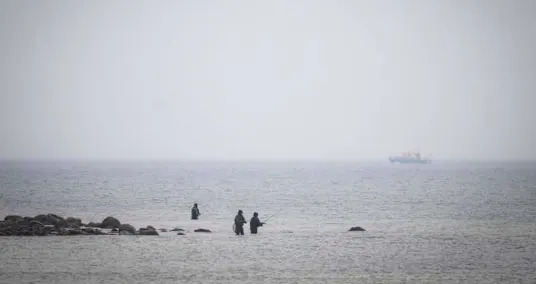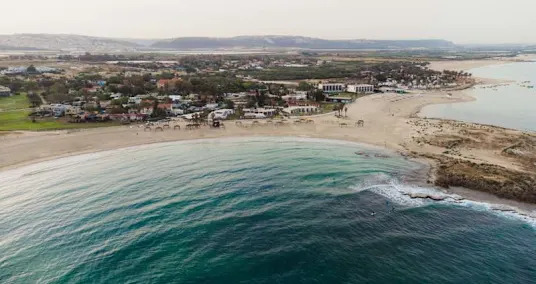
The discovery was made in an ancient shipwreck in the Dor Lagoon near the Carmel Coast, where archaeologists recovered nine pieces of unprocessed iron known as “blooms.”
Researchers from the University of Haifa said Wednesday that an underwater excavation off Israel’s northern Mediterranean coast uncovered what they described as the earliest known cargo of raw iron transported by ship, dating back around 2,600 years, Xinhua reported.
The discovery was made in an ancient shipwreck in the Dor Lagoon near the Carmel Coast, where archaeologists recovered nine pieces of unprocessed iron known as “blooms.” According to the university, the find provides direct evidence of how iron was transported in its earliest commercial stages.
The material was preserved in its original form, having solidified directly in a smelting furnace without undergoing forging or further refinement. Researchers said this distinguishes the cargo from later iron artifacts that typically show signs of shaping or tool-making.
Unlike copper and bronze, which could be melted into liquid form in ancient production processes, iron was heated with charcoal to produce a solid, porous mass. That mass was generally hammered to remove impurities and create denser material suitable for tools and implements.
The recovered blooms showed no indication of that secondary processing stage, suggesting they were transported immediately after production.

Earliest iron shipment discovered in ancient Mediterranean wreck
To determine the age and condition of the cargo, researchers conducted microscopic and chemical analyses.
Radiocarbon dating was also carried out on charred wood embedded in one of the pieces, helping confirm the timeline of the shipment. The findings were published in the journal Heritage Science.
Researchers said the cargo indicates that iron was being moved in raw form from production sites to other locations for further processing, pointing to a level of specialization in ancient manufacturing and trade networks in the Mediterranean.
The University of Haifa said the discovery provides new insight into early iron production and distribution practices in the region.
LATEST POSTS
- 1
 Moscow: Russia well-positioned to withstand oil market shocks
 - 2Let them eat (Taylor Swift) cake: The baker turning A-listers into life-size desserts
- 3Spanish bishops and government sign deal for compensation of church sexual abuse victims
- 4A Manual for SUVs with Less Noteworthy Gas Mileage
- 5Hezbollah field commander killed in IDF strikes in Beirut





- Well known SUVs With Low Energy Utilization In 2024 vote
- Why boosting production of Venezuela's 'very dense, very sloppy' oil could harm the environment
- Merz says army could be involved in mine-clearing from Hormuz
- Vote In favor of Your Favored Pizza Cover
- Whale stranded off Germany for days is stuck again
- Cyber Monday 2025 streaming deal: Get $42 off six months of Apple TV
- A somber Thor is returning for 'Avengers: Doomsday': Watch the dread-filled teaser
- Tech giants accused of not complying with Australian social media ban
- The beauty advent calendar boom is here. Sephora kids are all in.